How GPU Render Farms Are Transforming Creative Workflows
If you have ever watched a visually stunning animated film, explored a realistic video game, or admired detailed architectural visualizations, you have already seen the results of rendering at work. Behind every polished frame or lifelike image lies significant computing power. Increasingly, that workload is being handled by a GPU render farm.
For studios, freelancers, architects, and designers, GPU render farms have become an important part of modern production. They help creators render faster, work more efficiently, and produce higher-quality visuals without long delays.
Keep reading to discover how GPU render farms work, why they matter, and how they are transforming industries far beyond film and gaming.
What Is a GPU Render Farm?
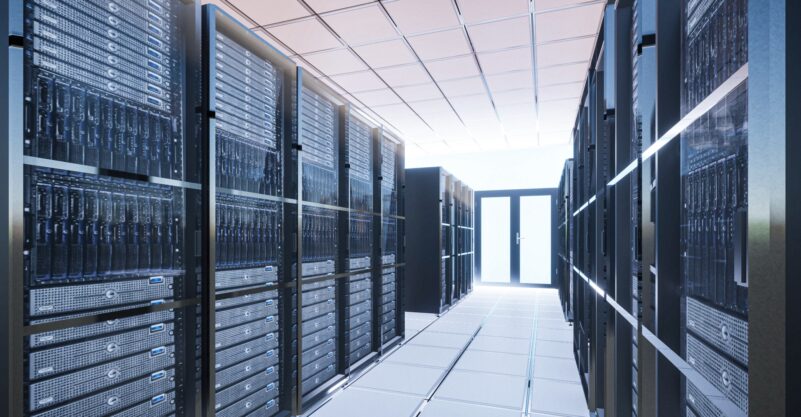
At its core, a render farm is a network of computers working together to process rendering tasks. Rendering is the process of converting raw digital data, such as 3D models, textures, lighting, and animation, into finished images or video frames.
Traditionally, render farms relied on central processing units (CPUs). CPUs are highly capable and versatile, but they are not always the most efficient option for rendering workloads that require thousands of simultaneous calculations.
This is where graphics processing units (GPUs) provide a major advantage. GPUs are designed to process many tasks simultaneously. This makes them highly effective for rendering, especially for complex lighting, ray tracing, simulations, and detailed scenes. A GPU render farm uses multiple GPU-powered machines to divide rendering jobs into smaller tasks, completing them much faster.
How GPUs Change Rendering
Rendering often involves calculating how light interacts with countless surfaces, materials, and objects in a scene. Since many of these calculations can run in parallel, GPUs are well-suited for the task. This leads to several major benefits:
- Faster rendering times
- Improved workflow efficiency
- Better support for realistic lighting and effects
- Quicker project turnaround
- More room for creative experimentation
For teams working under deadlines, faster rendering is not just convenient. It can be essential for meeting schedules and client expectations.
Who Uses GPU Render Farms?
While film studios and game developers are common users, GPU render farms are valuable across many industries.
Animation and Film
In animation, every frame must be rendered individually. A single second of footage may require 24 or more frames. A feature-length film can involve hundreds of thousands of frames. Without rendering power, this process can take an enormous amount of time. GPU render farms allow those frames to be processed in parallel, significantly reducing production timelines. This helps studios maintain quality while meeting release deadlines.
Architecture and Real Estate
Architects and developers use rendering to create realistic previews of buildings, interiors, and landscapes before construction begins. High-quality visualizations help clients understand layouts, materials, lighting, and design choices more clearly than blueprints alone. GPU render farms make it easier to produce high-resolution images quickly, especially when revisions are needed.
Product Design and Marketing
Manufacturers and product designers often render prototypes before physical production begins. This can include electronics, furniture, vehicles, packaging, and consumer products. Marketing teams also rely on rendered visuals for campaigns, websites, and advertisements. A GPU render farm helps teams create polished images faster while supporting multiple revisions during the design process.
Gaming and Virtual Reality
Modern games require detailed characters, environments, textures, and effects. Although game engines handle real-time graphics, many assets are still rendered during development. Cinematics, promotional materials, and high-quality previews also require rendering resources. GPU render farms enable developers to test changes more quickly and accelerate production cycles.
Cloud GPU Render Farms Are a Growing Solution
Not every business or freelancer has the budget, space, or technical resources to build an in-house render farm. This has made cloud rendering increasingly popular. With a cloud GPU render farm, users upload their projects to a remote network of machines and let the provider handle the rendering process. This model offers several advantages:
- Lower upfront hardware investment
- Access to powerful GPUs on demand
- Flexible scaling for larger projects
- Lower maintenance requirements
- Reduced energy and cooling costs
For smaller studios and independent artists, cloud rendering provides access to enterprise-level performance without the cost of expensive equipment.
The Role of Render Pool
One notable example in this space is Render Pool, a service that provides scalable GPU rendering power without requiring users to manage infrastructure themselves.
What makes Render Pool appealing is its accessibility. Rather than requiring deep technical knowledge, it allows artists to focus on their creative work while the platform handles the computational side. You upload your scene, configure your settings, and the system distributes the workload across its GPU network.
This kind of service reflects a broader shift in the industry. Rendering is no longer just a technical bottleneck; it’s becoming a flexible, on-demand resource. And for many creators, that flexibility can make a real difference in both productivity and creative freedom.
Challenges to Consider
Although GPU render farms offer major benefits, there are still several considerations to keep in mind.
- Hardware Costs: High-performance GPUs can be expensive. Building a private render farm often requires substantial investment in hardware, cooling systems, storage, networking, and power usage.
- Software Compatibility: Not every render engine is equally optimized for GPUs. Some workflows may still rely heavily on CPU rendering, which can limit the advantages of a GPU-based system.
- File Upload Times: For cloud rendering, large scenes with complex assets and high-resolution textures can take time to upload. This may slow down the workflow if internet speeds are limited.
- Scene Optimization: Even powerful hardware benefits from efficient scenes. Poorly optimized geometry, textures, or lighting setups can reduce performance and increase render times.
The Future of GPU Render Farms
GPU render farms are expected to become even faster and more accessible in the years ahead. Advances in GPU technology continue to improve rendering speed, memory capacity, and real-time performance. Features such as real-time ray tracing already allow creators to preview scenes with impressive realism.
Artificial intelligence is also becoming part of rendering workflows. AI tools can help with denoising, lighting prediction, scene enhancement, and automation. This can reduce render times while maintaining image quality.
Cloud platforms are also improving. Faster internet speeds and better data handling are making remote rendering more seamless than ever before.
Over time, the difference between local rendering and cloud rendering may become less important. Artists can access computing power whenever needed, without worrying about where the hardware is located.
Why GPU Render Farms Matter for Creativity
Rendering is often seen as a technical process, but it also directly affects creativity. When rendering takes too long, artists may hesitate to test new ideas or refine details. Slow feedback can limit experimentation.
When rendering is faster, creators can iterate more freely. They can adjust lighting, materials, camera angles, and effects without waiting long periods between versions. GPU render farms remove many of the barriers that once slowed creative work. They allow artists, designers, and studios to focus more on quality, innovation, and storytelling.
Try Render Pool Today
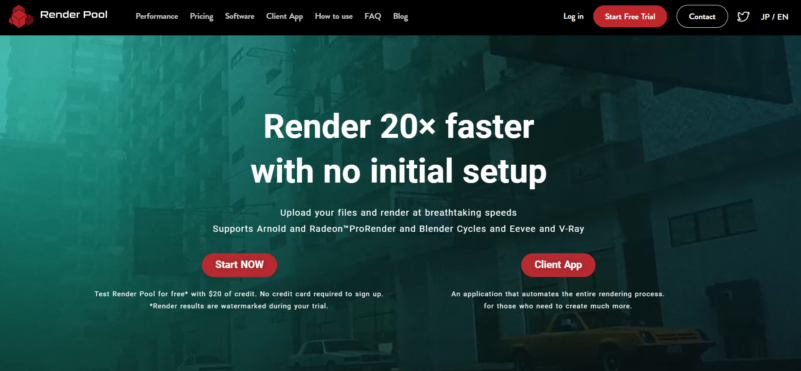
If you are looking for a faster and more flexible way to render, Render Pool offers cloud-based GPU rendering with no initial setup required. Upload your files and start rendering with support for Blender Cycles, Eevee, Chaos V-Ray, Autodesk Arnold, and Radeon ProRender. With speeds up to 20 times faster than local machines, scalable performance, and pricing starting at $0.03 per GPU minute, Render Pool is built for freelancers, studios, and enterprise teams alike. New users can also test the platform with $20 in free trial credit, and no credit card is required to sign up.
Whether you need to render a few frames or thousands of animations, Render Pool can help streamline your workflow and save valuable production time.