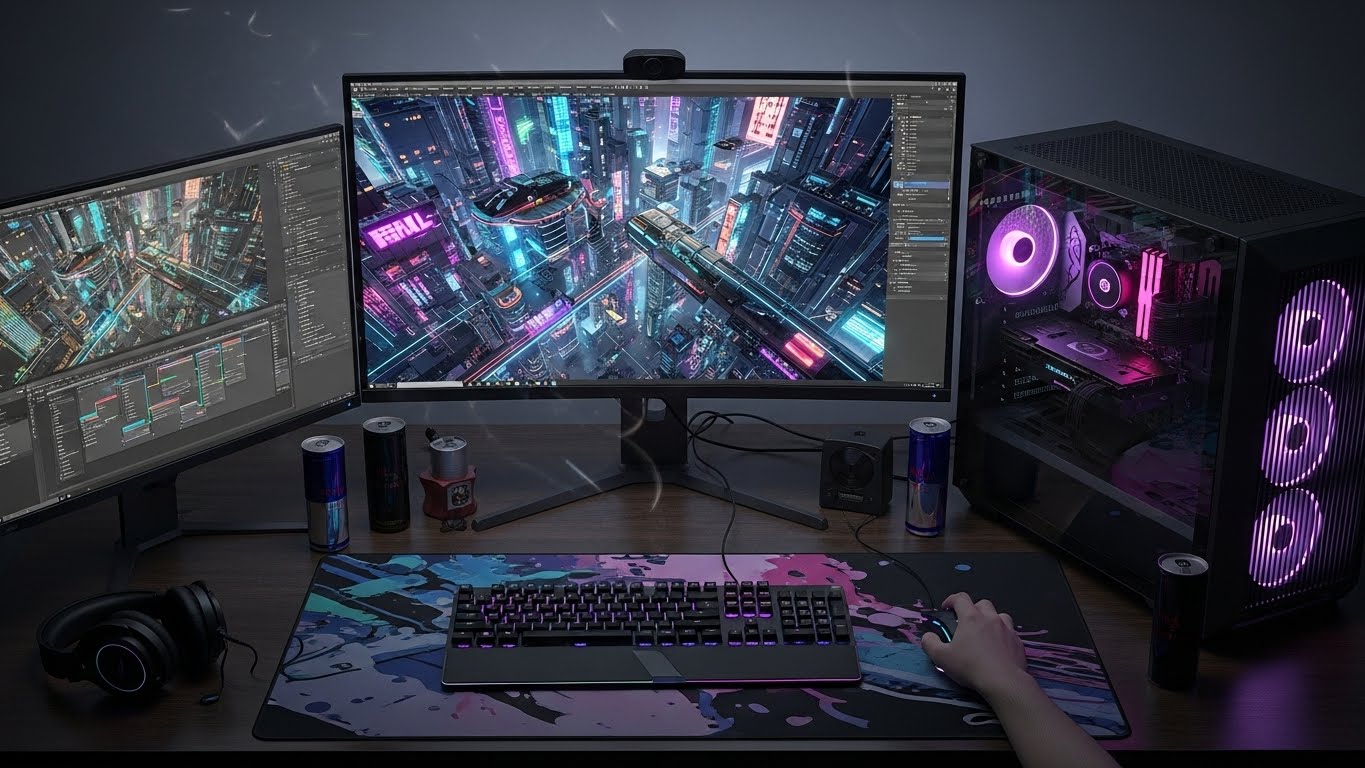
Rendering on the Cloud for Faster Creative Work
Some of the most significant shifts in creative technology arrive quietly. They don’t announce themselves with fanfare; instead, they slip into daily workflows until one day you realize everything has changed. It’s similar to how smartphones subtly transformed our lives. At first, you used them occasionally. Then, one morning, you noticed you hadn’t printed driving directions in years.
Rendering on the cloud operates in much the same way. There wasn’t a single moment when distributed rendering became the standard. Instead, it started gradually. Some artists tried it when their workstations struggled, studios adopted it to avoid constant hardware upgrades, and before long, the practice became commonplace. The real impact, however, goes beyond technical improvements: it has subtly shifted the emotional rhythm of creative work, changing the way artists interact with their tools. Keep reading to discover how cloud rendering transforms workflows, reduces stress, and expands creative freedom.
Breaking Free from Hardware Limitations
For years, a workstation defined an artist’s identity. If it was fast, you felt fast. If it lagged, you felt constrained. Many joked about temperamental machines that were sometimes obedient, sometimes moody, and always hungry for more RAM.
As projects grew more complex, however, workstations began to feel less like allies and more like obstacles. Adding volumetrics? The system hesitated. Increasing particle counts? It groaned. Full global illumination? The machine sweated under the strain. Slowly, the workstation shifted from the center of creative activity to a limitation to work around.
Cloud rendering doesn’t replace the workstation; it relieves it. Freed from the expectation of shouldering every task, your machine no longer had to be the hero of every story.
Rendering on the Cloud Feels Like Delegation, Not Automation
One of the subtler benefits of cloud rendering is the sense of delegation it brings. It’s like cooking for a large group and asking a trusted friend to help chop vegetables. You still prepare the ingredients, design the recipe, and oversee the outcome, but the heaviest lifting is shared.
Cloud rendering is often misunderstood as simply “letting a machine do the work.” In reality, the artistic decisions — composition, lighting, staging, mood — remain entirely yours. The cloud handles only the computational load, so your mind and your local workstation can keep moving forward. It’s less about automation and more about collaboration.
The Unexpected Calm of Letting Go
Sending a render to the cloud carries an almost ceremonial quality. You package your scene, set your parameters, and then release it. The result: freedom from the constant vigilance required by local rendering.
Rather than hovering over a workstation, you can step away, grab a snack, or simply take a breath. The anxiety of long renders — the fear of crashes, incorrect settings, or wasted hours — diminishes. Cloud rendering makes experimentation less costly and removes the emotional friction of waiting.
Rendering platforms like Render Pool illustrate this principle perfectly. Artists praise not just the raw computing power but the predictability and simplicity of the experience. Upload, choose settings, hit render, and the results arrive reliably. Cloud rendering services function as a “steady friend” in a field full of unpredictability, quietly supporting the creative process.
Making Mistakes Faster and Better
Cloud rendering encourages experimentation because the cost of failure is minimal. In traditional workflows, mistakes are expensive: a misconfigured render could consume hours. In the cloud, multiple iterations are feasible without penalty.
This shift transforms risk into opportunity. Artists can push scenes further, test lighting scenarios, and explore new camera angles. With the fear of error reduced, creativity naturally expands.
The Invisible Technology That Empowers Creativity
The most successful tools often fade into the background. Cloud rendering is heading in that direction. Future artists may never know the experience of waiting hours for a single frame; sending a job to the cloud will feel as natural as saving a file. Even seasoned professionals, nostalgic for the old workflow, recognize the efficiency and calm cloud rendering provides.
Cloud Rendering with Render Pool
As cloud rendering has become a standard part of modern production, certain platforms have distinguished themselves not just by raw performance but by how they simplify the creative process. What artists and studios consistently appreciate is how quickly Render Pool dissolves the usual barriers to getting work done. Instead of configuring hardware, juggling drivers, or troubleshooting yet another workstation bottleneck, you simply upload a file and begin rendering; no initial setup, no friction, and no interruptions to your workflow.
The increase in speed is immediately noticeable. Render Pool distributes frames across more than a thousand high-performance servers, often cutting render times by 10× to 20× compared to a local machine. Heavy scenes that include dense particle systems, expansive environments, or detailed character work move through the pipeline at a pace that would be impossible on a single workstation. This acceleration doesn’t just save time; it changes how you work. When rendering becomes fast and predictable, experimentation feels more natural, and iteration becomes part of the creative rhythm rather than an obstacle to it.
Render Pool supports major engines, including Blender Cycles, Autodesk Arnold, Chaos V-Ray, and Radeon ProRender, across Windows, macOS, and Linux. With a free trial offering $20 in credits, it’s easy to try the workflow shift firsthand. For many creators, Render Pool ultimately becomes less a service and more an extension of their studio — steady, dependable, and designed to keep the creative process moving forward.
The Creative Future Is Wider, Not Faster
Cloud rendering isn’t just about speed, though that benefit is clear. Its true value lies in the freedom to experiment, to be ambitious, and to explore ideas without hesitation. Instead of asking, “Can my machine handle this?” artists can ask, “What do I want this to look like?”
Rendering on the cloud is neither flashy nor dramatic. It quietly respects the artist’s time, workflow, and mental energy. It doesn’t replace creativity; it supports it. By removing technical limitations, cloud rendering allows artists to focus on what matters most: creating meaningful work.
Sometimes, the most human contribution of technology is simply stepping aside and letting you create.